
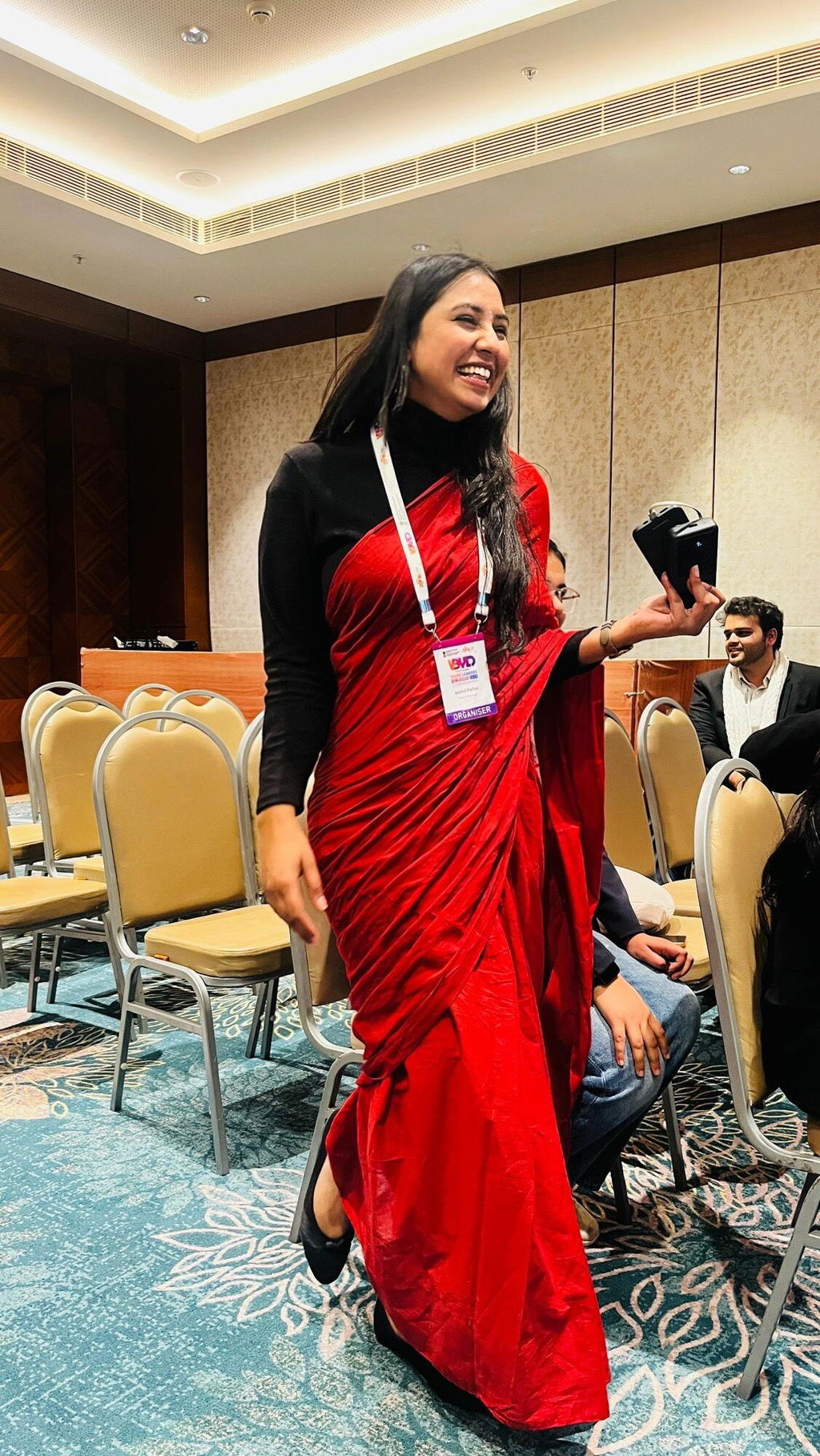
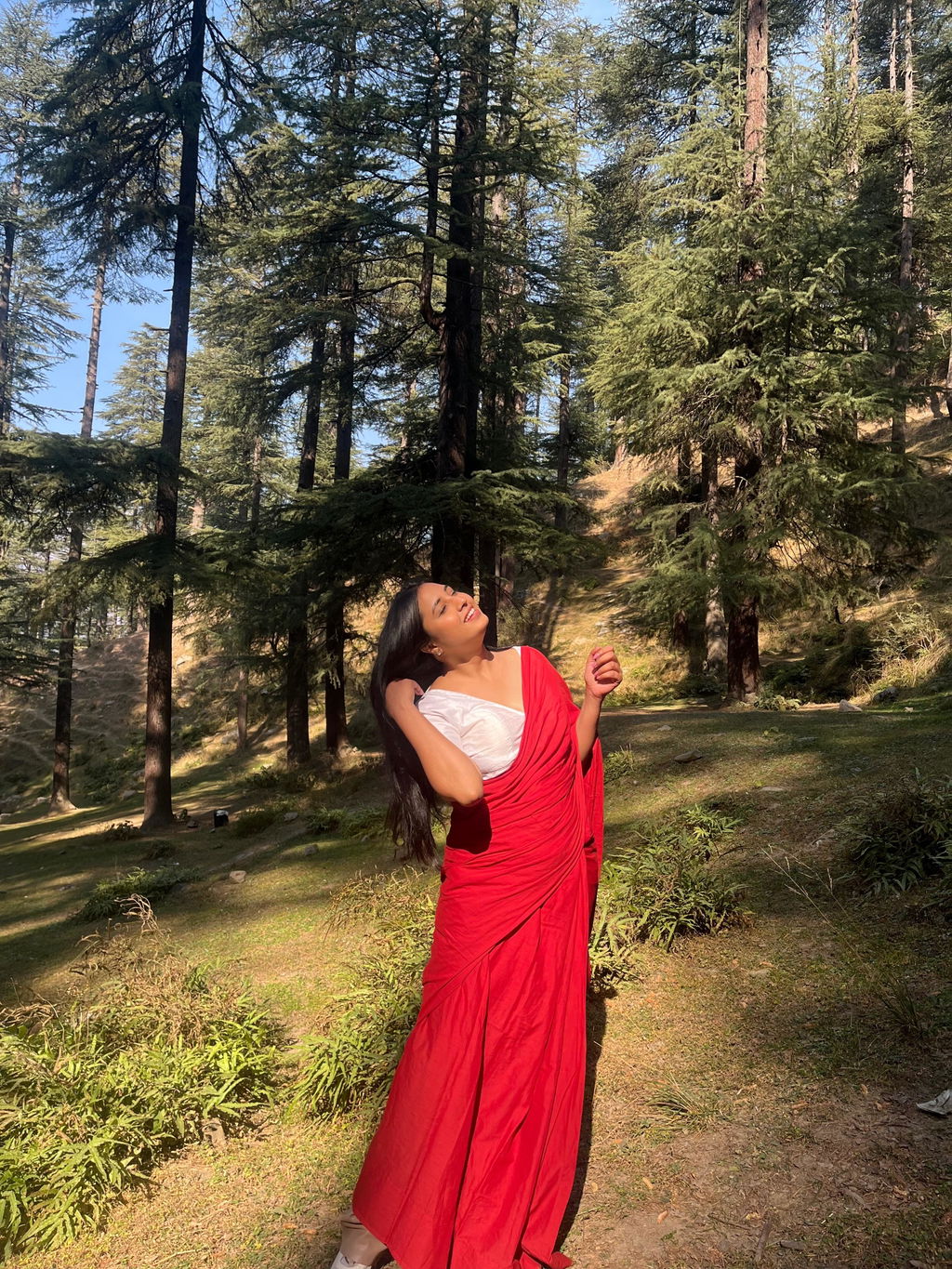
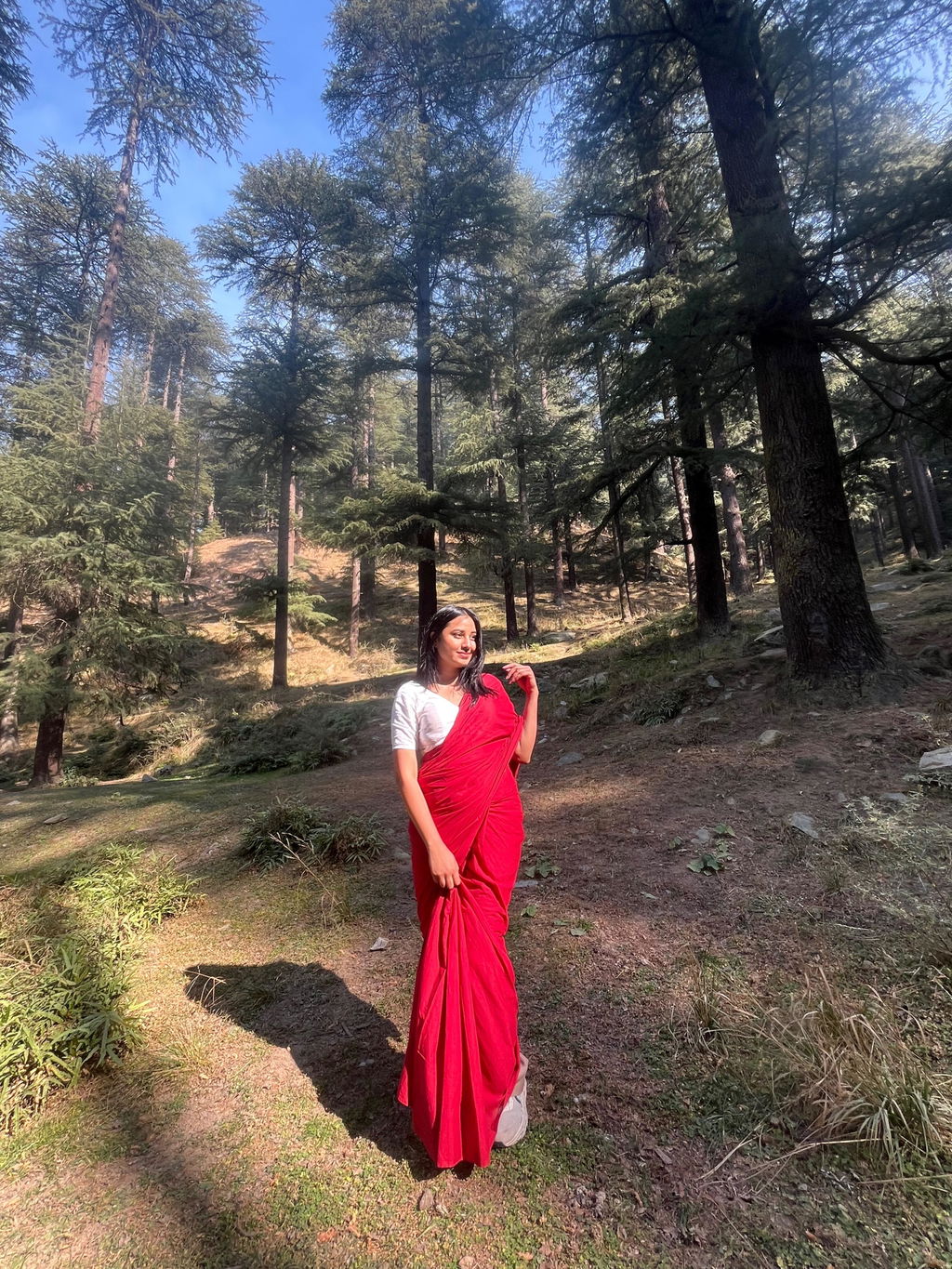
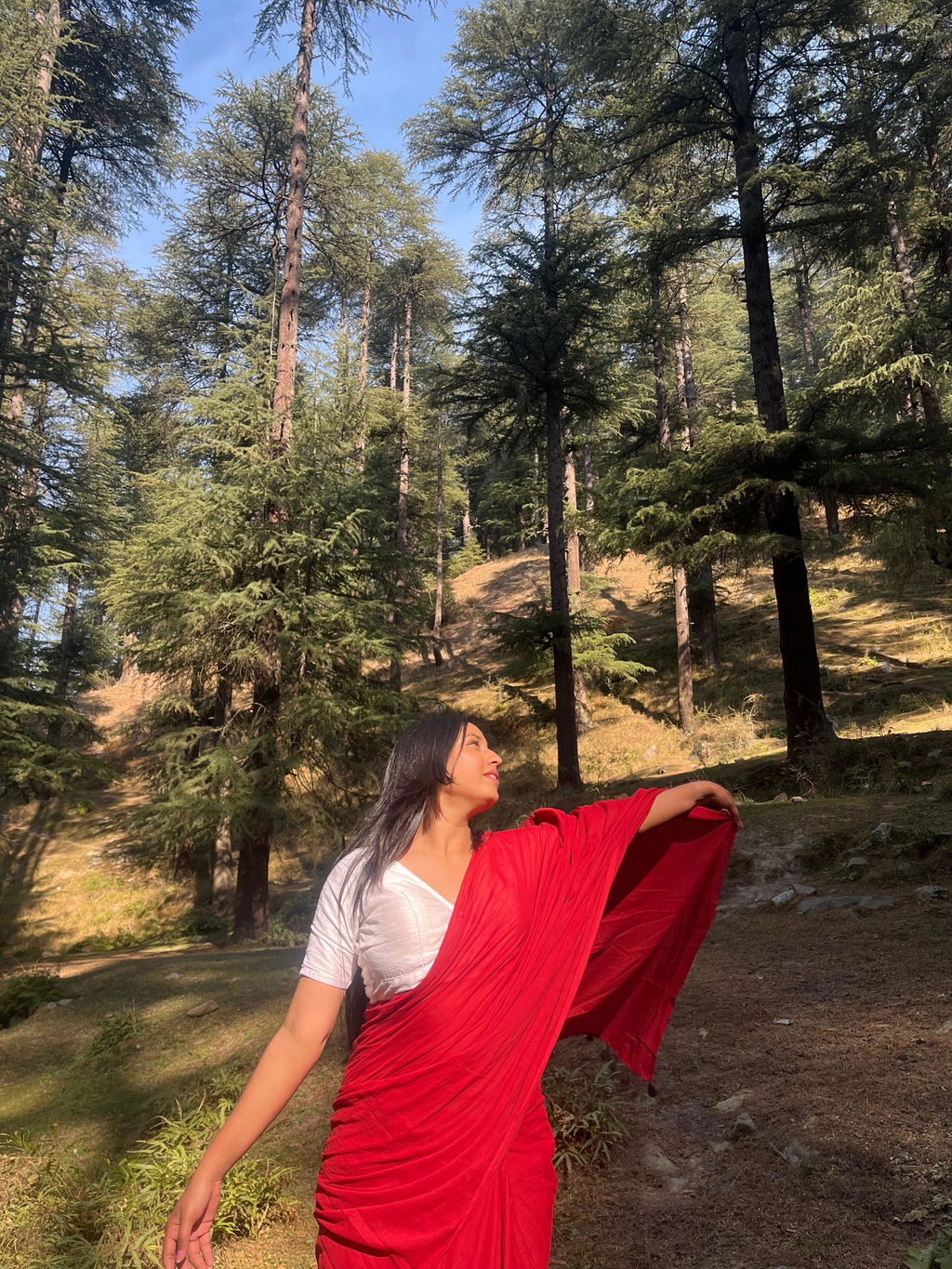
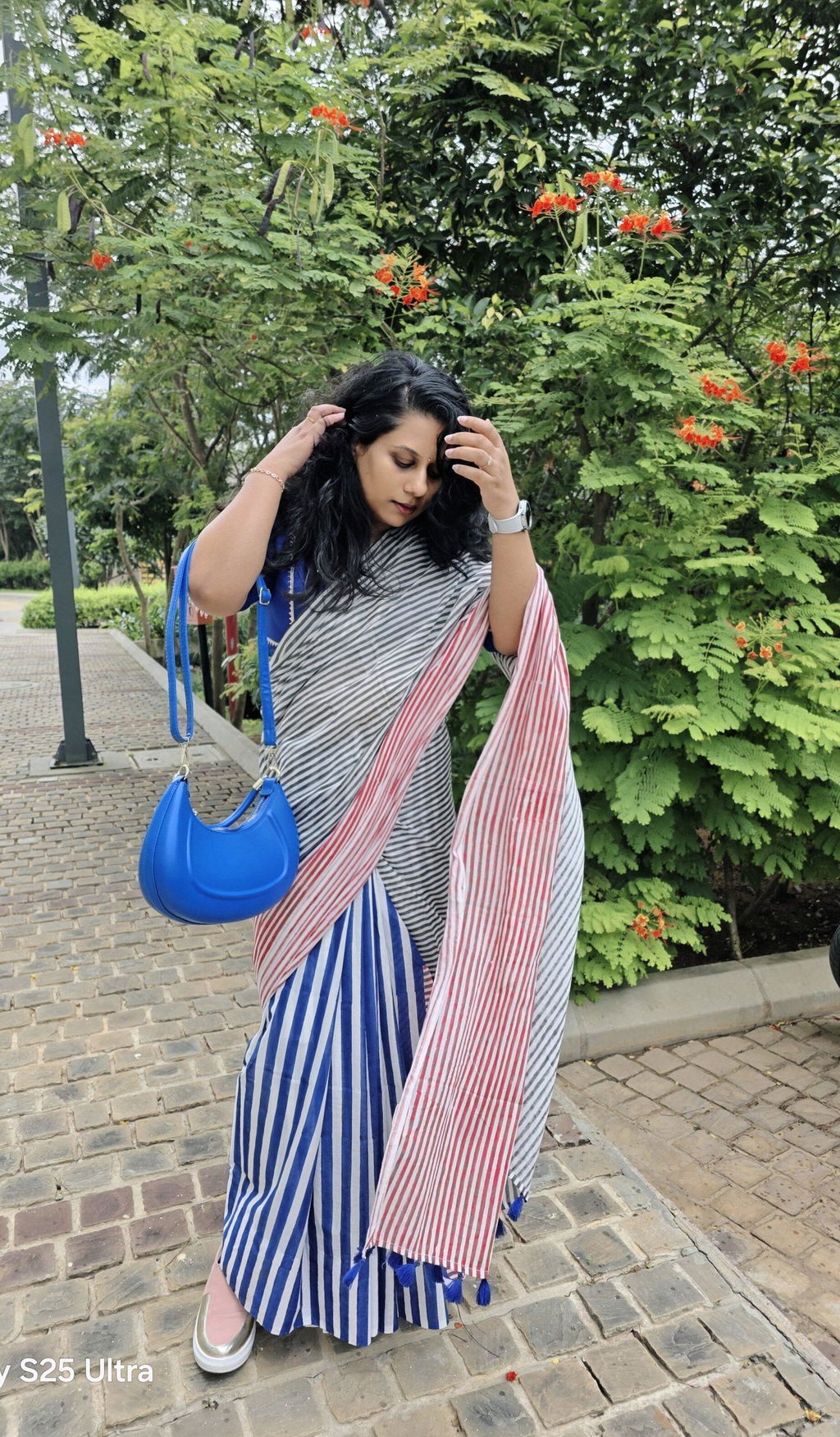
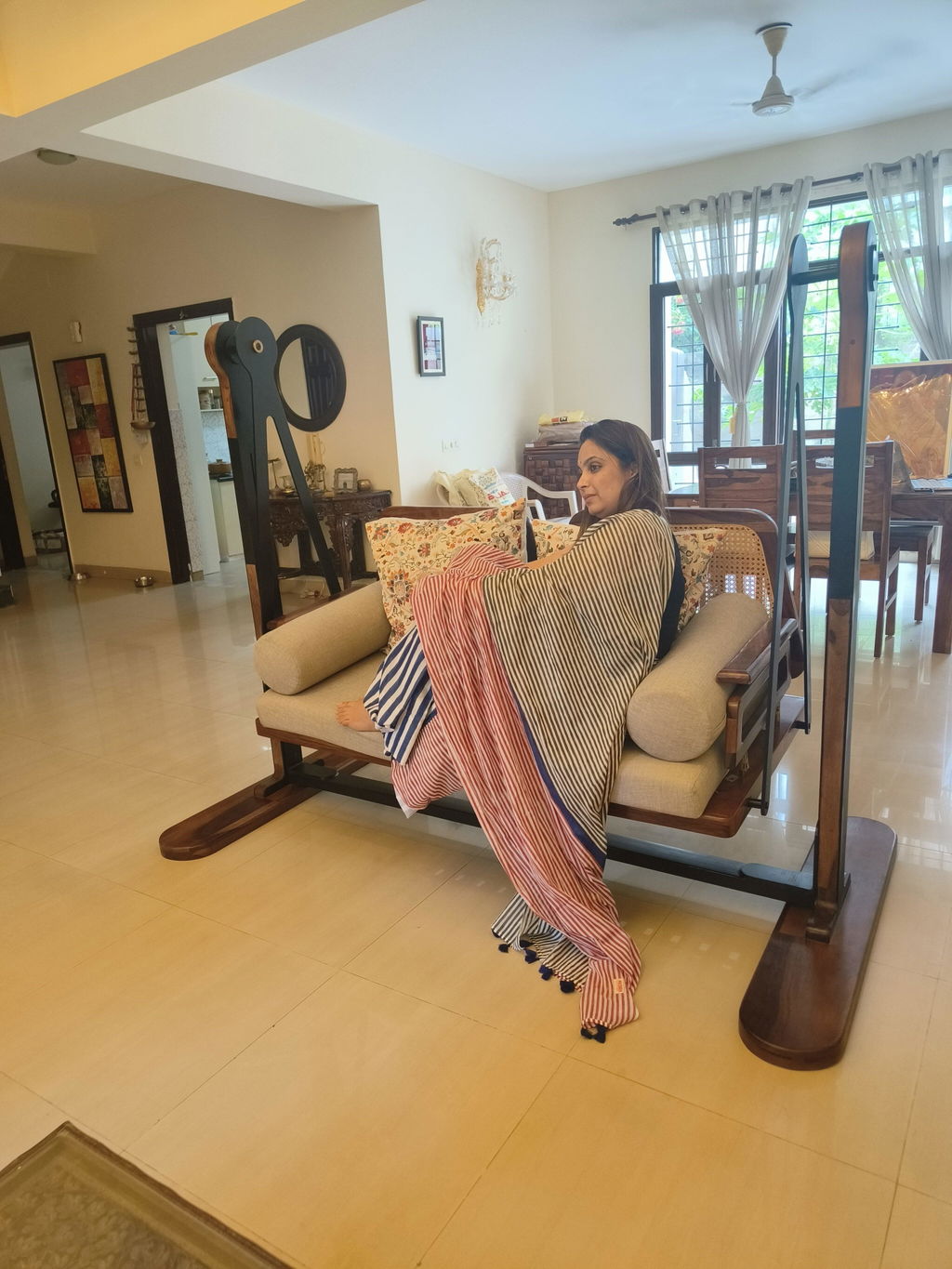


Discovering the process of Block to Body: the story of block print Saree

“The difference between a good saree and a great one is how it feels after the first few hours.”
Trends change quickly. Collections come and go, but comfort has always followed a slower rhythm and Artisan sarees belong to that rhythm. They are not created to sit still on hangers or wait for special occasions. They are made to move, to breathe, to soften with time, to be lived in.
From the first block that touches the fabric to the moment a saree settles on the body, there is a long, thoughtful journey in between. An artisan-made saree is not created in a single step. It is shaped slowly, by many hands, each adding care, skill, and intention. Every stage choosing the fabric, carving the block, printing the motifs, washing, drying, and finishing affects how the saree finally feels when worn. This process is not about perfection in appearance alone, but about comfort, balance, and longevity. Understanding how a saree is made helps us appreciate why it drapes the way it does, breathes the way it should, and becomes softer with time.
This is the Moora journey of an artisan saree from block to body.
The process of a saree becoming an artisan saree
A saree becomes an artisan saree when it is shaped by hands, not machines. It begins with natural fabric, chosen for how it feels on the skin and how it behaves in everyday wear. Artisans then bring it to life through traditional techniques like hand-block printing, where each motif is pressed by hand, one at a time. The colours are absorbed slowly. The fabric is handled gently. Nothing is rushed. This care allows the saree to remain breathable, soft, and balanced. An artisan saree carries the marks of the process that made it subtle variations, human rhythm, and a quiet sense of authenticity that cannot be replicated by mass production.
Hand Block : a quick tour about the art
 Hand-block printing is one of India’s oldest textile arts, believed to have originated over 2,000 years ago in regions like Rajasthan and Gujarat. The craft begins with artisans carving motifs into wooden blocks, then stamping them by hand onto fabric a slow, rhythmic process where every impression carries the touch of the maker. Historically, these prints were worn in daily life, not just stored for occasions, which is why they feel so natural and lived-in. Today, hand-block printing is experiencing a powerful revival. People are choosing it not only for its beauty, but for its authenticity, sustainability, and human connection.
Process of Hand Block Printing
1. Designing the Motif
 Image source: gemini
The process begins with creating the pattern or motif. This can be inspired by nature, architecture, culture, or heritage. The design is then refined into repeatable units that can align seamlessly across fabric.
2. Carving the Wooden Block
 Image source: Instagram / TheJaipurwala
A skilled block carver engraves the design onto seasoned teak or sheesham wood.
Each color in the design requires a separate block.
Fine details are chiseled manually so this part of the craft can take days.
3. Preparing the Fabric
Cotton or silk fabric is washed thoroughly to remove starch, oils, and impurities. This ensures the dye absorbs evenly. The fabric is then dried and stretched smooth on long padded tables.
4. Preparing the Natural or Pigment Dyes
 Artisans mix dyes in shallow trays so the block can absorb color evenly. Often eco-friendly or natural dyes are used. A felt pad sits inside the tray to help load the dye onto the block.
5. Aligning & Marking the Fabric
Guidelines are lightly drawn to ensure perfect repeat printing.
Precision matters, because one misplaced stamp affects the whole pattern.
6. Printing the Fabric
 Image source: Times of India
The artisan dips the block into dye, presses it firmly onto the cloth, and taps it with the palm for an even impression. This is repeated across the fabric slowly, rhythmically. Multiple blocks are used layer-by-layer to build color and detail.
This is the heart of the craft.
7. Drying the Printed Fabric
Once printed, the fabric is sun-dried. Sunlight helps colors bond and mature.
8. Fixing the Color
Depending on the dye used, the fabric is steamed, boiled, or treated with natural fixatives like alum to ensure colorfastness.
9. Final Washing and Finishing
The fabric is washed again to remove excess dye, dried, ironed, and finished.
Now it is ready for stitching sarees, blouses, dresses, dupattas, and more.
The Fabric Choice: Comfort Is Decided Early

The comfort of a saree is determined long before it reaches the body. Artisan saree brands like Moora choose fabrics that already understand the Indian climate.
Natural fibres. Breathable weaves. Lightweight constructions.
Fabrics like mulmul and fine cotton are not selected because they photograph well.
They are chosen because they behave well, they allow air to pass, they absorb moisture without clinging, they adapt to body temperature. This is why artisan sarees feel almost invisible on the skin like a second layer rather than an outfit.
Dyeing: Colour That Ages Gracefully
Dyeing is what gives a saree its mood, but good dyeing also gives it a future. In artisan dyeing, colour is not rushed or forced into the fabric. The cloth is prepared first, so it can absorb colour evenly. Then the dye is applied in a way that lets the fibres drink it in slowly, instead of sitting like a harsh layer on top. This is why the colour feels softer to the eye and gentler on the skin. It does not look loud or flat. It looks lived-in, even when it is new.
What makes this kind of colour special is how it changes with time. Like any natural thing, it settles. It softens slightly after washes. It becomes calmer, not weaker. Instead of cracking or turning patchy, it grows into a more familiar shade, the way old photographs feel warm and real. When dyeing is done with care, the saree does not lose its beauty after a few wears. It carries it forward, slowly and gracefully.
An artisan saree is designed to change with you to look better after many wears, not just the first one.
The Making: Built for Movement, Not Display
Mass-produced sarees are often made to be admired from a distance.
Artisan sarees are made to be worn up close. Every stage of making considers movement:
How the fabric will fall when you walk
How it will fold when you sit
How it will rest on the shoulder for hours
This is the difference between a saree that looks beautiful and a saree that feels right.
Why Artisan Sarees Feel More Comfortable
Artisan sarees feel more comfortable because they are created with the body not just the eye in mind. The comfort begins at the yarn stage, where natural fibres like cotton, linen, silk, and mulmul are chosen for their breathability and softness.
These fibres allow air to circulate and heat to escape, which keeps the skin cool even in humid climates. Unlike mass-produced sarees that are often treated with chemical stiffeners, artisan sarees undergo minimal processing. This means the fabric retains its natural flexibility and remains gentle against the skin.
The weaving itself is slower and more deliberate, so the threads are not stretched or stressed, resulting in a cloth that moves with the wearer instead of resisting them. Over time, the saree adapts to the wearer’s body softening through wash and wear until it feels almost like a second skin. Because artisan sarees are light, breathable, and unforced, you never feel weighed down or overheated. The comfort is not just physical but emotional too: there is ease in knowing that the fabric touching your skin was made thoughtfully, ethically, and with human care not rushed through a machine.
For Long Workdays

Lightweight artisan sarees stay breathable through hours of wear. They do not trap heat or restrict movement, making them ideal for workdays that stretch from morning to evening.
For Travel

Soft fabrics fold easily, occupy less space, and recover beautifully after unpacking. They are forgiving, not fussy.
For Daily Wear

The more you wear them, the better they feel. The fabric relaxes. The drape improves. The saree begins to mould itself to your body.
This lived-in quality is impossible to manufacture quickly.
The Difference Between Wearing and Living In a Saree
There is a quiet but important difference between wearing a saree and living in one. Wearing a saree is often about appearance how it looks when first draped, how it holds its shape, how it is seen from a distance. Living in a saree is about how it behaves over time. It is about whether the fabric allows movement without resistance, whether it breathes through long hours, whether it stays gentle on the skin as the day unfolds. A saree that is lived in does not require constant adjustment or attention. It settles into the body’s rhythm, responding naturally to heat, motion, and rest. It becomes less about presentation and more about presence. Artisan sarees are created with this lived experience in mind, shaped not just for moments but for days, routines, and real life. This is what transforms a saree from something that is simply worn into something that truly belongs to the wearer.
Moora was built around this philosophy. Every Moora saree is designed with one core belief: A saree should fit into your life, not interrupt it. From artisan printing to fabric selection, from lightweight construction to ready-to-wear ease, the focus remains the same comfort without compromise.
Moora’s one-minute sarees extend this idea further. They remove the last barrier many women face: time.Pre-pleated, easy to wear, and rooted in the same artisan values, they bring centuries of craft into modern routines.
The Quiet Strength of Artisan Sarees
In a world that celebrates speed, volume, and visibility, artisan sarees stand for something quieter and far more enduring.
Their strength does not come from stiffness or structure. It comes from softness that has been earned. From fabrics that breathe, move, and soften with time. From craft that has been passed down, not rushed forward. An artisan saree does not demand attention. It earns it slowly, through wear.
What makes these sarees powerful is not how loudly they announce themselves, but how naturally they become part of life. They are worn across long days and ordinary moments. They absorb movement, weather, and memory. They change with the body, instead of resisting it. Over time, they begin to feel less like garments and more like second skins.
This is the quiet strength of artisan sarees the ability to last without hardening, to soften without weakening, to remain relevant without chasing trends.
At Moora, this belief shapes every decision. From choosing breathable natural fabrics to working closely with artisans who understand cloth beyond aesthetics, the focus has always been on creating sarees meant to be lived in. Sarees that make space for comfort, ease, and real life. Sarees that honour tradition not by preserving it behind glass, but by letting it move freely in the present.
Because true luxury is not loud.
It does not shout for attention or demand perfection.
It settles in gently, stays with you through the day, and feels right long after the first wear.
That is the kind of strength artisan sarees carry and the kind Moora continues to create.
FAQs About Artisan Sarees
1. Are artisan sarees comfortable for daily wear?
Yes, artisan sarees are especially suited for daily wear because comfort is considered right from the beginning of their making process. Unlike mass-produced sarees that are often created for display, trend cycles, or occasion-wear, artisan sarees begin with a simple question: how will this feel on the body through the day? That intention deeply influences the choice of yarn, the looseness of the weave, and even the dyeing and finishing techniques.
Natural fibres such as fine cotton, mulmul, and linen allow air to circulate and absorb moisture gently instead of trapping heat. The saree moves with you rather than sitting stiffly on the skin. Over time, artisan fabrics soften further as the fibres relax with washing and wear, making the saree feel more familiar and personal. This is why many women say their oldest artisan sarees are their most comfortable ones they’ve grown with them.
This makes artisan sarees ideal for long workdays, everyday routines, travel, and climates where breathability matters more than showiness or structure.
2. Why do artisan sarees feel softer than machine-made ones?
The softness of an artisan saree comes from the honesty of the fabric rather than artificial finishing. Machine-made sarees often achieve “instant softness” by coating the material with chemical softeners or silicone washes. These treatments may feel smooth initially, but they fade quickly and sometimes affect breathability.
Artisan sarees, on the other hand, rely on fine yarns, gentle weaving rhythms, and minimal industrial processing. The cloth remains closer to its natural state, keeping its flexibility and airflow intact. As the saree is worn and washed, the fibres relax and open up, creating a lived-in softness that cannot be replicated chemically.
So instead of losing softness over time, artisan sarees gain it the drape becomes easier, the fall smoother, and the tactile comfort more intimate.
3. Are artisan sarees suitable for Indian weather?
Absolutely. Artisan sarees are, in many ways, a textile response to Indian weather. Long before climate control existed, Indian weaving traditions developed fabrics that supported heat, humidity, and long hours of movement. That wisdom continues today.
Light-weight cottons, breathable weaves, fine mulmul, and airy linens allow heat to escape and help regulate body temperature. Natural fibres absorb sweat gently instead of sticking to the skin or trapping odour. Because artisan sarees also avoid heavy resin finishes and dense coatings, they remain wearable even during peak summers or humid monsoons.
They aren’t just appropriate for Indian weather they were born from it.
4. Are artisan sarees durable enough for frequent use?
Yes, when cared for properly, artisan sarees are incredibly durable. Durability comes not from heaviness, but from the quality of the yarn and the integrity of the weave. Since artisan sarees are usually woven slowly and thoughtfully, the threads are not stressed or over-processed.
The fabric adapts instead of tearing, and because natural fibres age gracefully, the saree often becomes more beautiful with time rather than worn out. Many artisan sarees are passed down across generations, carrying both emotional and material longevity.
5. What makes an artisan saree different from a factory-made saree?
The biggest difference lies in intention and human involvement. Artisan sarees are created by skilled craftspeople weavers, dyers, printers, and finishers often working with traditional techniques preserved over centuries. Every step is guided by touch, rhythm, and experience.
Factory-made sarees, by contrast, prioritise speed and volume. Patterns are often printed or woven mechanically, and fabrics are processed chemically for fast production.
This means artisan sarees carry individuality. Tiny variations in weave or print are not flaws they are signatures of human craftsmanship.
6. Do artisan sarees require special care?
Not necessarily just mindful care. Most artisan cotton sarees can simply be hand-washed or gently machine-washed, preferably with mild detergent. Avoid harsh chemicals, strong wringing, or tumble drying. For silk or naturally dyed sarees, dry-cleaning or gentle hand-washing is best.
With simple care, artisan sarees last for years sometimes even decades.
7. Are artisan sarees suitable for professional and office wear?
Very much so. Artisan sarees are often lightweight, breathable, and elegant without being flashy which makes them perfect for everyday work environments. Their drape is soft and composed, projecting quiet confidence rather than theatrics.
Many working women prefer artisan sarees because they allow movement and comfort through the day, whether in meetings, commuting, or long desk hours.
8. Do artisan sarees support sustainable fashion?
Yes artisan sarees are naturally aligned with sustainability. They are usually made using natural fibres, slow production methods, minimal chemical processing, and ethical labour that values skill and community.
Instead of disposable fashion, artisan sarees encourage slow, intentional wearing — and because they last long, they reduce waste. In many cases, they also support rural livelihoods and preserve cultural heritage.
9. Why do artisan sarees feel more personal than mass-produced ones?
Because there is a human story woven into them. When a saree is made by hand, it carries the rhythm of the loom, the patience of the artisan, and a lineage of knowledge passed through generations. Wearing it feels like participating in a living tradition rather than consuming a product.
The way the saree softens with you, adjusts to you, and records memory through wear makes it feel less like clothing and more like companionship.
10. Are artisan sarees only for special occasions?
Not at all. While some artisan sarees are luxurious and ceremonial, many are designed specifically for everyday life. Historically, handwoven fabrics were daily-use garments. Today, they continue to suit routines work, errands, travel, quiet evenings, teaching, meetings, and family life.
In fact, artisan sarees are often most beautiful when worn simply and often.
11. Do artisan sarees drape differently from synthetic sarees?
Yes. Natural fibres respond to gravity and movement in a softer, more organic way. Synthetic sarees often feel slippery or static-charged, while artisan sarees mould gently to the body. The pleats sit naturally. The pallu flows with ease. The drape looks less rigid and more alive.
This contributes greatly to comfort you don’t feel like you are “managing” the saree.
12. Are artisan sarees suitable for sensitive skin?
Generally yes. Because artisan sarees use natural fibres and fewer chemical coatings, they tend to be kinder to the skin. Fabrics like mulmul, linen, and natural cotton are breathable and hypoallergenic, making them comfortable even for those prone to irritation.
13. Why are artisan sarees often considered heirloom pieces?
Because they are created with care, quality, and heritage. Many weaving traditions carry cultural stories and design vocabulary unique to a region. Owning an artisan saree means preserving a piece of history. When passed down, it becomes memory-rich layered with personal and cultural significance.
14. Do artisan sarees go out of style?
No because they are not created for trends. They are rooted in timeless aesthetics, slow craft, and classic drapes that outlive fashion cycles. That makes them future-proof in a way most mass-produced clothing is not.
15. Who are artisan sarees meant for?
Artisan sarees are meant for anyone who values comfort, authenticity, craftsmanship, and quiet elegance whether you are a student, professional, homemaker, creative, elder, or young woman discovering sarees for the first time. They are democratic. They belong to everyday life.

