

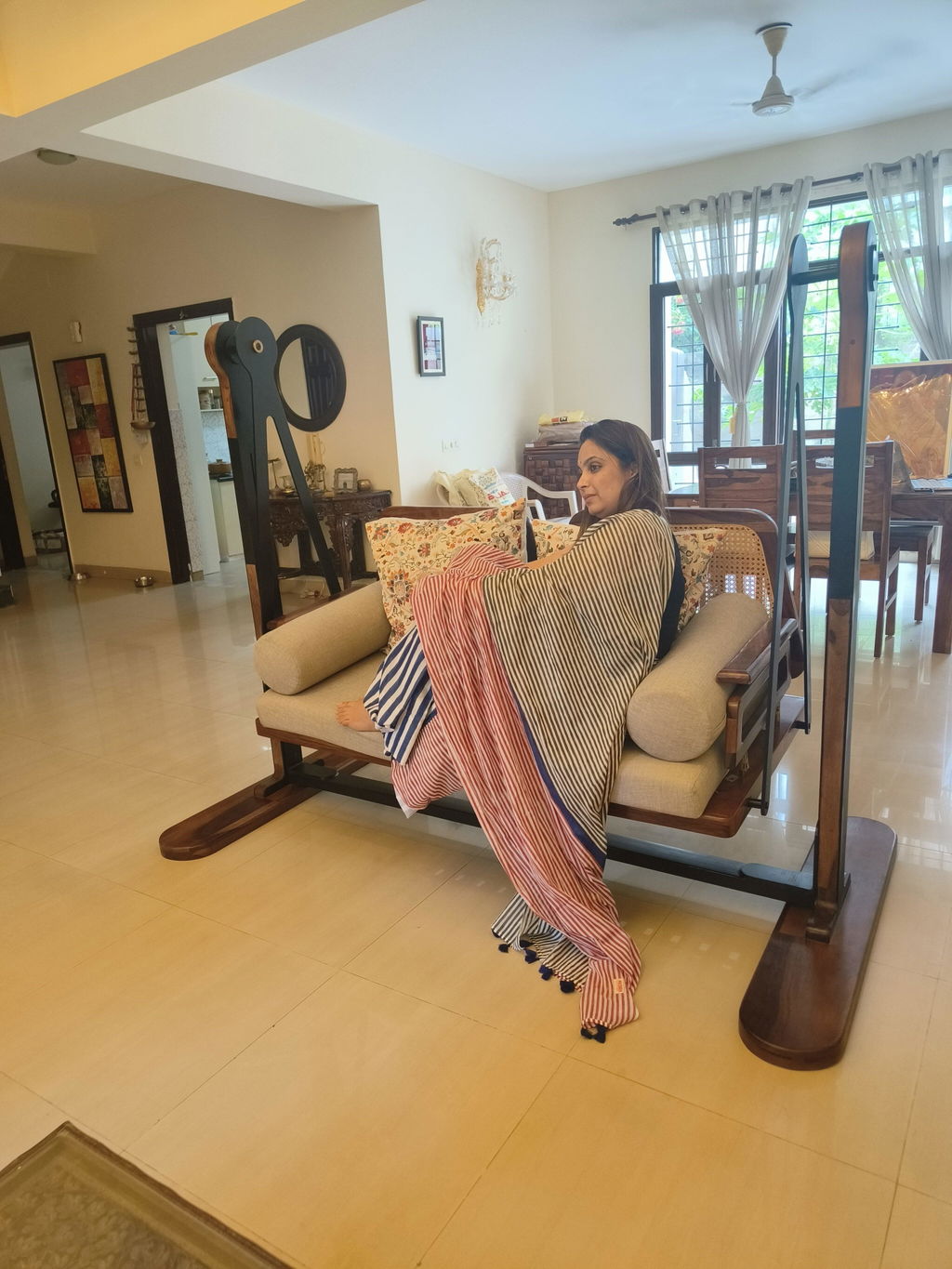



How Pre-Draped Sarees Are Designed: Fit, Structure, and Fabric Explained
For many women, the saree has always been admired from a distance. It is graceful, timeless, and deeply rooted in culture, yet often kept aside for special occasions. The reason is rarely the saree itself. It is the process around wearing it draping, pinning, adjusting, worrying that creates hesitation. Pre-draped sarees were not created to replace tradition. They were created to remove friction.
Understanding how pre-draped sarees are designed reveals why they feel different from traditional sarees, why they are easier to wear, and why they fit so naturally into modern wardrobes. This is not about shortcuts. It is about engineering comfort, fit, and confidence into a garment that has always deserved to be worn more often. This guide breaks down fit, structure, and fabric the three pillars that define a well-designed pre-draped saree.
Rethinking the Saree for Modern Life

The traditional saree assumes time, assistance, and stillness. It was designed in an era where dressing was an event in itself. Modern life, however, is fast, layered, and mobile. Women dress alone, move constantly, and shift between roles throughout the day. Pre-draped sarees emerge from this reality. They are designed not just to look like a saree, but to function within real schedules. The intention is not simplification for convenience alone, but designing for repeat wear. To understand why pre-draped sarees work, we need to understand how they are built.
What Makes a Pre-Draped Saree Different by Design
A traditional saree is a flat length of fabric that relies entirely on the wearer’s skill to become a garment. A pre-draped saree, on the other hand, is partially constructed. Its pleats, waist fit, and fall are engineered before it reaches the wearer. This design intervention shifts responsibility from the wearer to the garment. The saree is no longer dependent on memory, technique, or repeated adjustments. Instead, it holds its own shape, supports movement, and maintains its structure throughout the day. This is where fit, structure, and fabric come together.
FIT: Designing for the Body, Not Against It

Fit is the most misunderstood aspect of saree design. In traditional sarees, fit is created manually each time the saree is worn. This leaves room for inconsistency, discomfort, and anxiety.Pre-draped sarees approach fit systematically. The waist is designed with a defined structure often elasticated, zip-based, or hook-secured to ensure stability without constriction. This eliminates the fear of slipping or loosening over time. A well-designed pre-draped saree distributes weight evenly instead of concentrating it at one point.
The length is fixed according to size rather than guesswork. This allows the saree to skim the floor correctly without dragging or tripping. For the wearer, this means freedom of movement without constantly monitoring the drape. Most importantly, fit in pre-draped sarees is designed for movement. Sitting, walking, climbing stairs, and standing for long hours are considered during construction. This is what transforms the saree from an occasion garment into an everyday one.
Why Size Mapping Matters in Pre-Draped Sarees
 Traditional sarees are often described as “free size,” but in practice, this places all responsibility on the wearer. Pre-draped sarees introduce size mapping XS to XL or beyond bringing precision into saree wearing. Size mapping ensures that the pleats fall correctly across the hips, that the pallu length is proportionate, and that the waist fit feels secure rather than tight. This approach respects body diversity instead of expecting bodies to adapt to fabric.
Good pre-draped design acknowledges that fit is not about squeezing the body into shape, but shaping the garment around the body.
STRUCTURE: The Invisible Engineering of Ease
The most important work in a pre-draped saree is often invisible. Pleats are stitched or set in a way that mimics traditional hand-pleating but stays intact throughout wear. These pleats are positioned to allow natural stride length, preventing the restrictive feel that poorly designed stitched sarees can create. The pallu is either attached or semi-attached, ensuring it stays in place without constant pinning. This attachment is done strategically so the saree retains fluidity rather than appearing stiff or costume-like.

Structure in a pre-draped saree is about predictability. The wearer knows how the saree will behave throughout the day. This predictability reduces mental load, which is a subtle but powerful benefit.
Balancing Structure with Softness
One common misconception is that structure makes garments rigid. In thoughtful pre-draped design, structure is balanced with softness. Internal seams are designed to remain flexible. Pleats are structured but not stiff. Waistbands hold shape without digging into the skin. This balance ensures that the saree feels secure yet breathable. The goal is not to create a rigid garment, but a self-supporting one.
FABRIC: Why Fabric Choice Is Everything

Fabric determines how a pre-draped saree behaves. Not all saree fabrics translate well into pre-draped forms. Designers must choose materials that drape well, hold structure, and recover shape after movement. Cotton, cotton blends, crepe, georgette, and soft satin are commonly used because they balance flow with stability. These fabrics allow pleats to stay defined while still moving naturally with the body.
Heavier fabrics may require additional internal support, while very light fabrics need reinforcement to prevent collapse. This makes fabric selection a technical decision, not just an aesthetic one. A well-designed pre-draped saree feels natural because the fabric has been chosen specifically for this construction method.
Why Cotton Works So Well in Pre-Draped Sarees
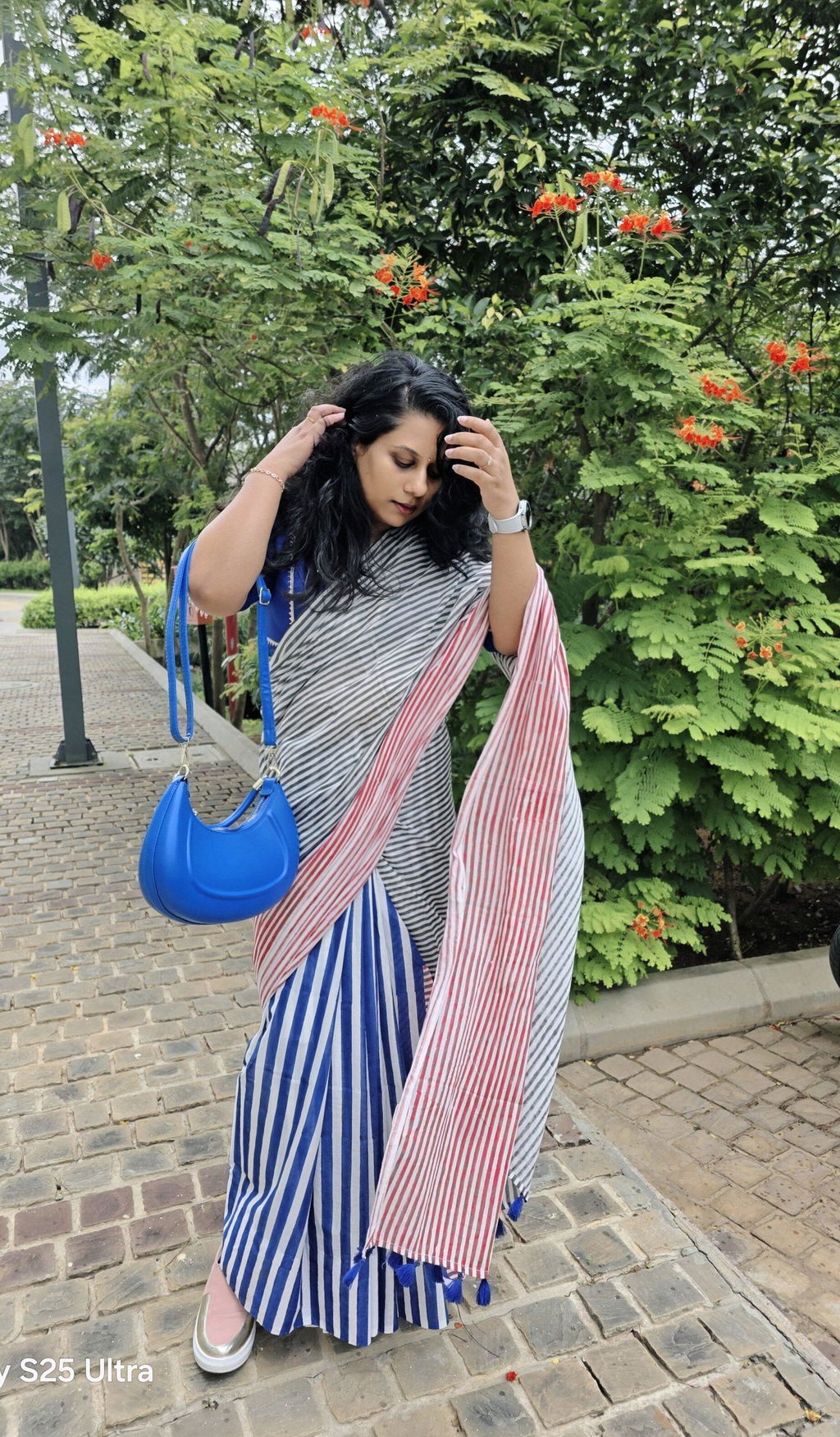
Cotton deserves special mention. Traditionally seen as simple or casual, cotton becomes powerful in pre-draped form. Its breathability makes it ideal for long wear. Its natural texture allows pleats to sit comfortably without slipping. When designed correctly, cotton pre-draped sarees combine comfort with reliability.
Modern cotton sarees use refined weaves and finishes that allow structure without stiffness. This evolution is part of why cotton pre-draped sarees are becoming central to everyday wardrobes.
The Relationship Between Blouse and Pre-Draped Saree

A pre-draped saree is only as good as the blouse paired with it. The blouse anchors the saree visually and physically. Ready-to-wear blouses complement pre-draped sarees by offering consistent fit and proportion. Necklines are chosen to balance the pallu. Armholes are designed to allow movement without pulling on the drape.
When a blouse and saree are designed together or at least with compatibility in mind the entire outfit feels cohesive rather than assembled. This cohesion is what allows pre-draped sarees to feel elevated rather than experimental.
Designing for Independence and Confidence
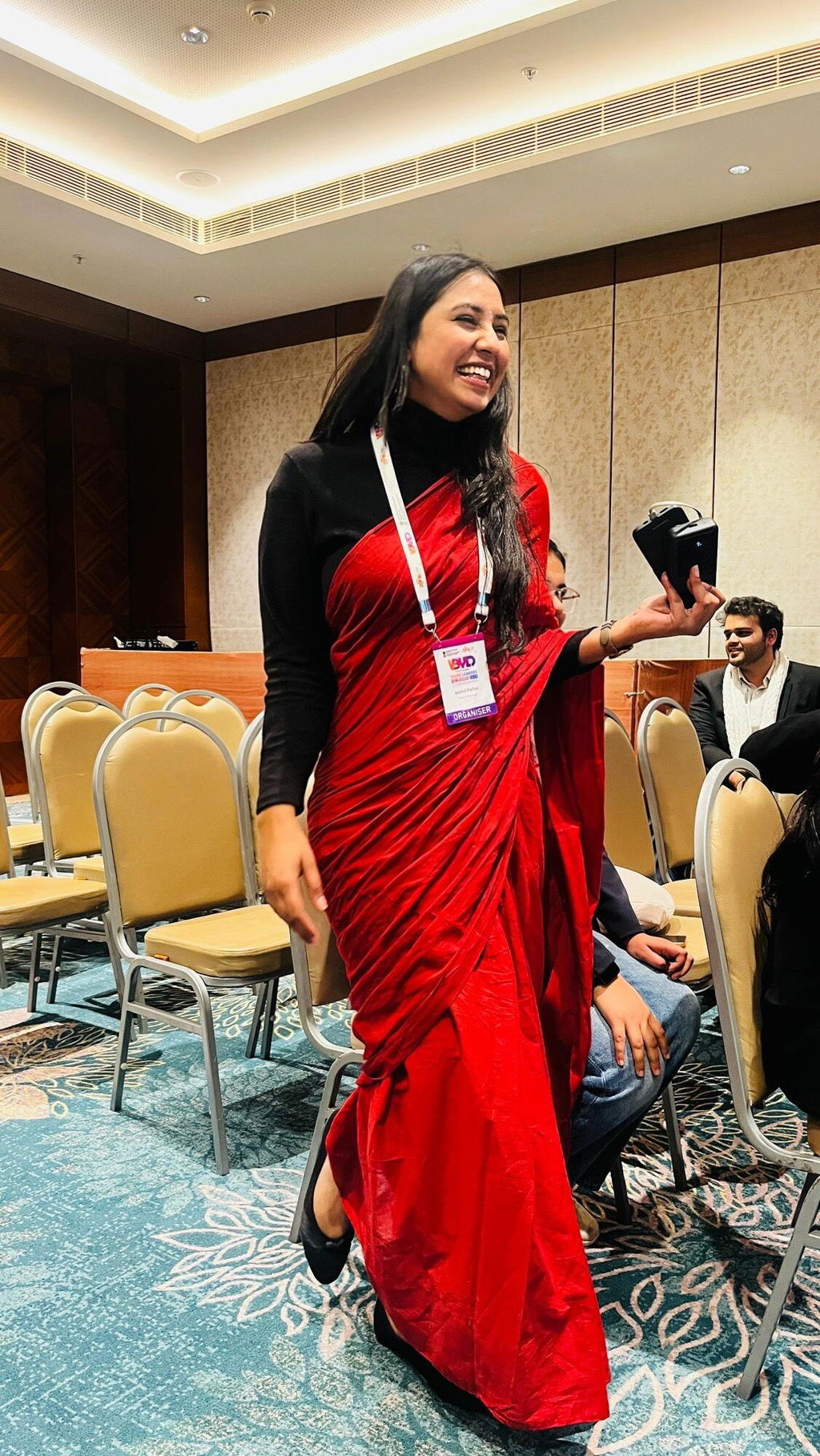
One of the most overlooked benefits of pre-draped sarees is independence. The wearer does not need assistance. She does not need to check mirrors repeatedly. She does not need to worry about adjustments. This confidence changes how the saree is worn. The wearer moves freely, engages fully, and forgets about the garment instead of managing it. Thoughtful design always aims for this disappearance of effort.
Pre-Draped Sarees and Slow Fashion
From a slow fashion perspective, pre-draped sarees encourage repeat wear. When something is easy to wear, it gets worn more often. When it gets worn more often, it earns its place in the wardrobe. This is sustainability in practice, not theory.
Pre-draped sarees reduce the need for multiple outfits for different occasions. They adapt across settings with minimal styling changes. This versatility lowers consumption and increases garment lifespan. There is a persistent idea that convenience reduces value. Pre-draped sarees challenge this notion. They do not remove tradition; they reinterpret it. They do not reduce elegance; they support it. They do not simplify culture; they allow it to be lived in. Designing ease into a saree is not dilution. It is respect for the garment and for the wearer.
The Future of Saree Design

Pre-draped sarees represent a shift in how Indian wear is approached. They signal a move from performance dressing to lived-in dressing. As more designers focus on fit, structure, and fabric with intention, sarees will continue to evolve not away from tradition, but deeper into relevance.
Final Thought
A well-designed pre-draped saree is not just easier to wear. It is easier to love.
By engineering fit, building intelligent structure, and choosing the right fabric, designers create sarees that belong in everyday life. Sarees that move with the body. Sarees that do not ask for effort.And in a world where women already do enough, that kind of design is not optional. It is necessary.
Frequently Asked Questions
Q1: What exactly is a pre-draped saree and how is it different from a traditional saree?
A pre-draped saree is a saree that has been partially constructed in advance to simplify the wearing process. Unlike a traditional saree, which is a flat length of fabric that must be draped manually each time, a pre-draped saree comes with pre-stitched pleats, a defined waist structure, and often a secured or semi-attached pallu. This design allows the saree to retain the look of a traditional drape while eliminating the need for pinning, tucking, and repeated adjustments.
Q2: Do pre-draped sarees still look like real sarees when worn?
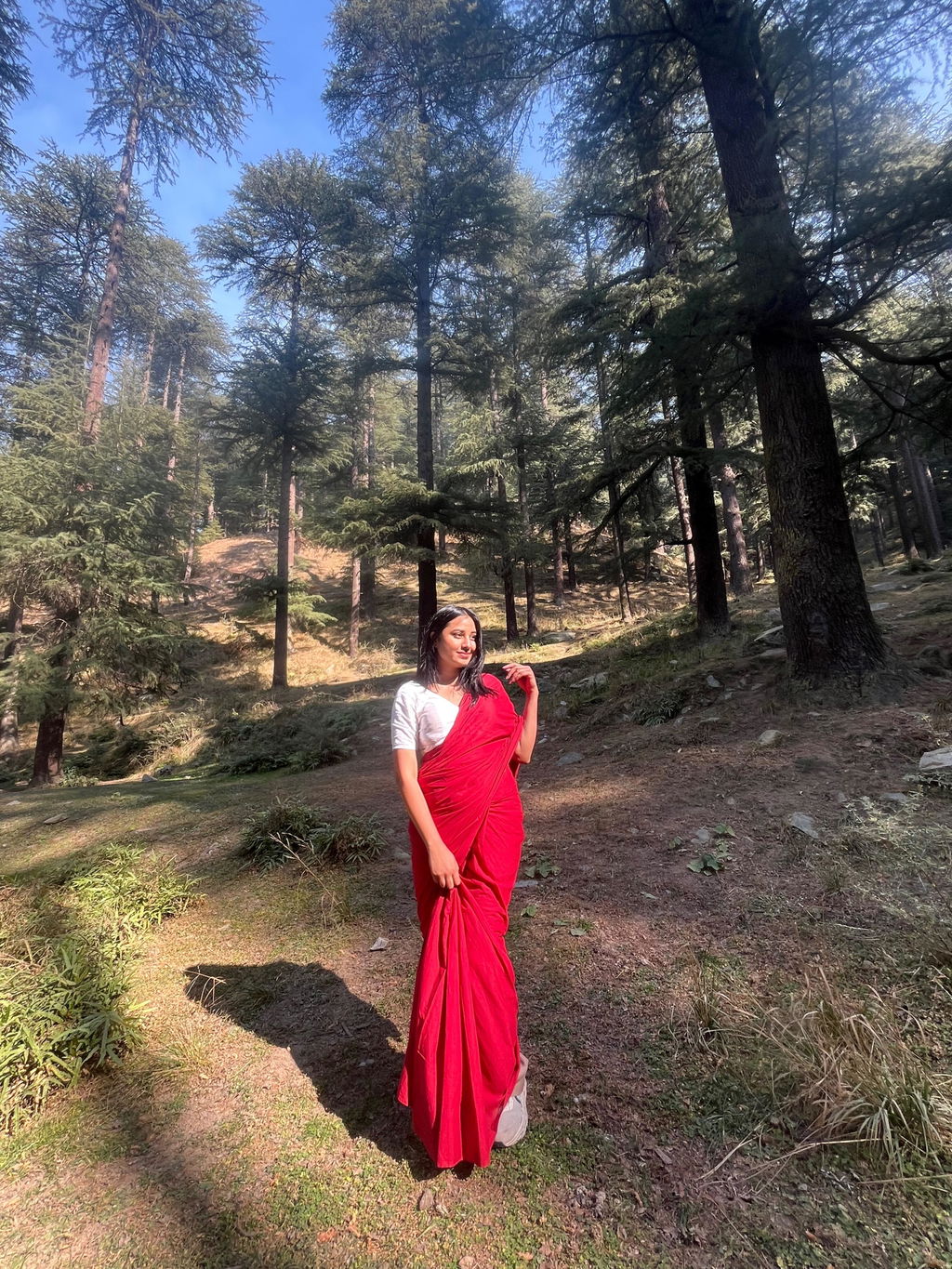
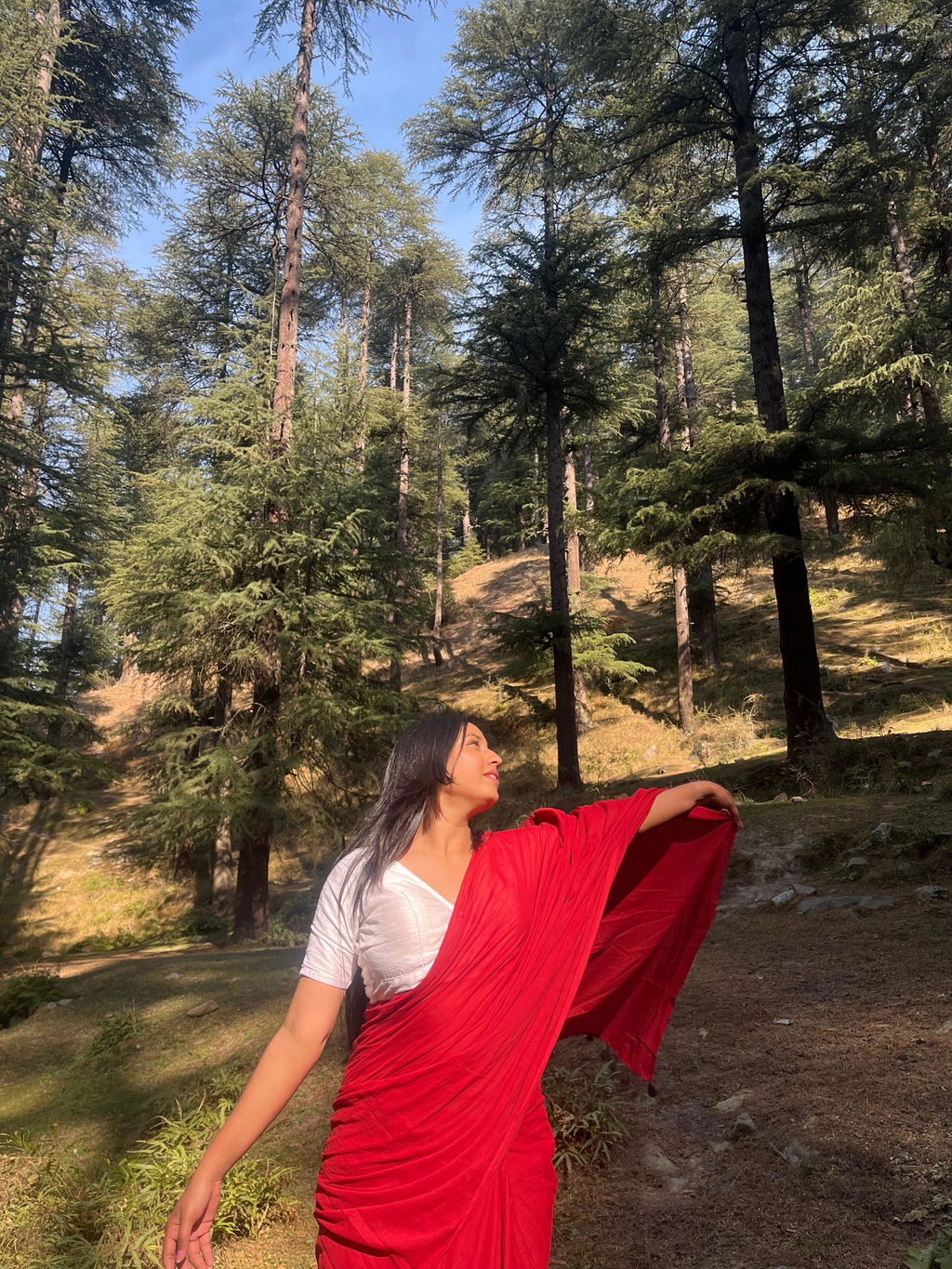
Yes, a well-designed pre-draped saree looks visually identical to a traditionally draped saree. The difference lies in construction, not appearance. The pleats, fall, and pallu placement are carefully engineered to mimic traditional draping techniques. When worn, the saree maintains fluidity and elegance, without appearing stiff or costume-like.
Q3: How is fit handled in pre-draped sarees?
Fit in pre-draped sarees is created through structured waistbands, size-based construction, and proportion mapping. Instead of relying on manual tucking, the saree is designed to sit securely at the waist using elastic, hooks, zippers, or panels. Sizes are mapped so that pleats fall correctly across the hips and the length remains consistent. This ensures comfort, stability, and ease of movement throughout the day.
Q4: Are pre-draped sarees comfortable for long hours of wear?
Comfort is one of the primary reasons pre-draped sarees exist. Because the pleats are secured and the waist is structured, there is no need for constant readjustment. Well-designed pre-draped sarees distribute fabric weight evenly, allowing the wearer to sit, walk, and move freely for extended periods. When paired with breathable fabrics, they are suitable for all-day wear.
Q5: What fabrics work best for pre-draped sarees?
Not all saree fabrics translate well into pre-draped designs. Fabrics that drape naturally while holding structure are ideal. Cotton, cotton blends, crepe, georgette, and soft satin are commonly used because they balance flow with stability. These fabrics allow pleats to remain defined without becoming rigid and recover their shape after movement.
Q6: Why is cotton increasingly used in pre-draped sarees?
Cotton is gaining popularity in pre-draped sarees because it offers breathability, softness, and reliability. Modern cotton weaves hold pleats well while remaining gentle on the skin. In pre-draped form, cotton becomes especially practical for everyday wear, allowing sarees to be worn comfortably for long hours without overheating or discomfort.
Q7: Are pre-draped sarees suitable for everyday wear or only special occasions?
Pre-draped sarees are especially well-suited for everyday wear. Their ease of wearing, secure structure, and predictable fit make them practical for workdays, social outings, travel, and daily routines. While they can also be styled for occasions, their biggest advantage lies in making sarees wearable beyond special events.
Q8: How do pre-draped sarees support modern, independent lifestyles?
Pre-draped sarees allow women to dress independently without assistance. There is no need for help with draping, pinning, or checking pleats. This autonomy fits naturally into modern lifestyles where time, mobility, and self-sufficiency matter. Clothing that supports independence is a key element of thoughtful dressing.
Q9: Can pre-draped sarees accommodate different body types?
Yes, when designed correctly, pre-draped sarees can work across a wide range of body types. Size-based construction, flexible waist structures, and proportionate pleat placement help the saree adapt to different shapes. Unlike free-size traditional sarees, pre-draped designs acknowledge body diversity and aim to fit the garment to the body rather than the other way around.
Q10: Do pre-draped sarees restrict movement compared to traditional sarees?
No. In fact, they often allow better movement. Because the pleats are secured and the length is fixed, there is less risk of tripping or fabric shifting. Well-designed pre-draped sarees are tested for walking, sitting, and daily movement, making them more reliable than manually draped sarees.
Q11: How important is structure in a pre-draped saree?
Structure is central to the success of a pre-draped saree. It ensures that pleats stay in place, the pallu behaves predictably, and the saree maintains its shape throughout wear. However, good structure is subtle. It supports the saree without making it stiff or uncomfortable. The goal is stability without rigidity.
Q12: Can pre-draped sarees be part of a slow fashion wardrobe?
Yes. Pre-draped sarees align strongly with slow fashion principles because they encourage repeat wear. When sarees are easy to wear and comfortable, they are used more frequently. This reduces the need for multiple outfits and supports mindful consumption. Longevity and usability are central to slow fashion, both of which are enhanced by pre-draped design.
Q13: Are pre-draped sarees sustainable?
Sustainability in fashion is closely tied to how often a garment is worn. Pre-draped sarees promote sustainability by increasing wear frequency and reducing wardrobe redundancy. While fabric sourcing and production methods matter, usability plays a major role in reducing waste. A saree that is worn often has a lower environmental impact than one that remains unused.
Q14: Do pre-draped sarees require special care?
Care depends on the fabric rather than the construction. Most pre-draped sarees can be cared for like traditional sarees made of the same material. It is important to follow fabric-specific care instructions and store them properly to maintain pleat structure. With proper care, pre-draped sarees retain their shape over time.
Q15: Are pre-draped sarees just a trend or a long-term shift in Indian wear?
Pre-draped sarees represent a long-term shift rather than a passing trend. They respond to real lifestyle needs such as time efficiency, comfort, and independence. As long as women seek clothing that supports daily life without sacrificing identity, pre-draped sarees will continue to be relevant.
Q16: How should someone start incorporating pre-draped sarees into their wardrobe?
The best way to start is with one versatile pre-draped saree in a comfortable fabric and neutral or adaptable colour. Pair it with a well-fitted blouse that works across occasions. Once the ease and comfort become familiar, adding more styles becomes a natural extension rather than a forced purchase.
Q17: Do pre-draped sarees take away from the cultural value of sarees?
No. Pre-draped sarees help preserve cultural relevance by making sarees wearable in modern life. Tradition survives when it evolves. By adapting the saree to contemporary routines, pre-draped designs ensure that this garment continues to be worn, valued, and passed forward.

